


Understanding ranks and rates is a key part of life at sea. They show where people sit within the ship’s structure, the responsibilities they hold, and how different departments work together.
This page gives you a straightforward guide to the main Merchant Navy ranks and ratings, from cadet level through to senior officers, and explains where each role fits on board.
Ranks, roles and responsibilites are likely to differ in reality to this page. This just gives you a rough idea!

It is important to recognise that cruise lines, cargo operators, and flag states may use different insignia or rank slides to denote ranks and onboard roles. Below is a concise overview of the most commonly encountered systems.




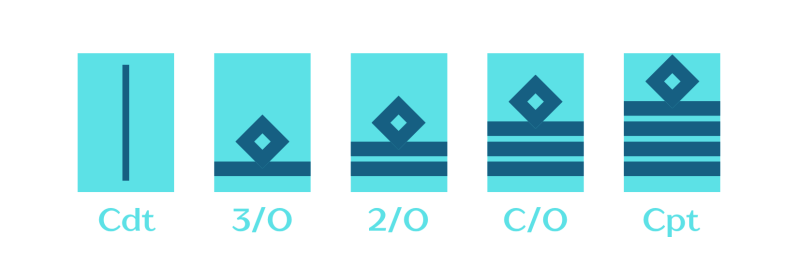
Originating from traditional European merchant navies, the diamond symbol was used to distinguish deck officers without copying naval rank curls directly. It provided a clear, neutral officer identifier suitable for civilian service.
Companies that use this style Include:
- Carnival UK
- Seabourn
- Seapeak LNG
- Royal Fleet Auxiliary
The curl (or loop) style is derived from Royal Navy officer lace, where the curl denoted commissioned status and authority. It became widely adopted by merchant fleets seeking to reflect naval professionalism and hierarchy.
Companies that use this style Include:
- Princess Cruises
- Holland America Line
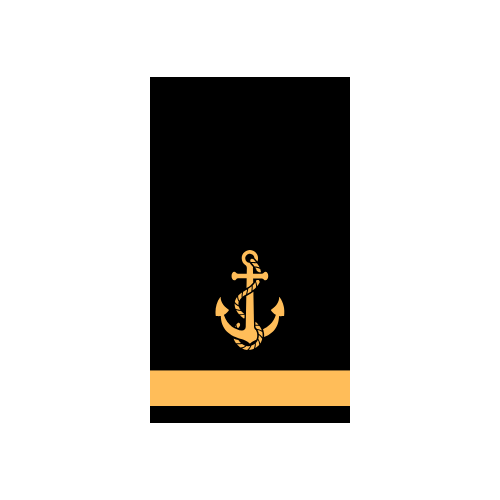
The anchor symbol has long been associated with seamanship and command at sea, historically worn by senior officers to emphasise responsibility for the ship rather than rank alone. It is mostly used in Countries like the USA.
Companies that use this style Include:
- Celebrity







A Deck Cadet is a deck officer-in-training gaining practical sea experience while completing professional qualifications. The role is designed for learning through supervised participation.
-
Assists officers during navigational watches
-
Learns passage planning and bridge procedures
-
Takes part in deck maintenance and seamanship
-
Completes training record books
-
Participates in drills and safety routines
The Fourth Officer is an entry-level deck officer role found mainly on cruise ships. This position supports navigation, safety, and administrative duties while gaining experience toward senior officer roles. Usually they are 'First Trip' Officers.
-
Stands navigational watches under supervision
-
Assists with safety management tasks
-
Supports passenger safety and emergency roles
-
Helps maintain bridge documentation
-
Gains experience across deck operations
The Third Officer is a junior watchkeeping officer with primary responsibility for shipboard safety equipment and emergency preparedness.
-
Stands navigational watches as Officer of the Watch
-
Maintains lifesaving and firefighting equipment
-
Keeps safety equipment records and inspection logs
-
Assists with passage planning and chart corrections
-
Supports cargo operations and deck maintenance
-
Plays a key role in emergency response and drills






The Second Officer is the ship’s navigation specialist, responsible for voyage planning and the upkeep of navigational publications and systems.
-
Stands navigational watches as Officer of the Watch
-
Plans voyages from berth to berth
-
Maintains charts, nautical publications, and ECDIS
-
Monitors weather, routing, and navigational warnings
-
Ensures navigational compliance with COLREGs
-
Assists with cargo operations and safety management
The First Officer is a senior watchkeeping deck officer who supports the Senior Officers while taking on increased operational and leadership responsibilities. They are usually the Senior Watchkeeping Officer.
-
Stands navigational watches as a senior Officer of the Watch
-
Assists the Chief Officer with deck department management
-
Supervises junior officers and cadets
-
Supports cargo, ballast, and stability operations
-
Takes delegated responsibility for safety management tasks
-
Acts as a relief officer during pilotage and critical operations
The First Officer (Bridge Manager) is responsible for the organisation, standardisation, and safe operation of the ship’s bridge, ensuring effective bridge resource management at all times.
-
Manages bridge procedures and watchkeeping standards
-
Oversees navigational practices and compliance with company policies
-
Ensures correct use of ECDIS, radar, and bridge equipment
-
Supervises bridge team training and competency
-
Coordinates bridge manning for navigation and pilotage
-
Supports the Master in voyage execution and navigational risk management






The Safety Officer is responsible for the coordination, implementation, and monitoring of the ship’s safety and emergency preparedness systems.
-
Oversees onboard safety management and emergency procedures
-
Ensures compliance with the Safety Management System (SMS)
-
Plans, conducts, and evaluates drills and emergency training
-
Monitors lifesaving and firefighting equipment readiness
-
Investigates accidents, incidents, and near misses
-
Liaises with officers and departments on safety matters
The Staff Captain is the senior deck officer directly supporting the Master and acts as the operational head of the ship’s departments.
-
Assists the Master in overall ship management
-
Oversees deck, safety, and navigation departments
-
Coordinates safety, security, and emergency preparedness
-
Supervises senior officers and department heads
-
Manages operational planning and shipboard discipline
-
Acts as Master’s deputy and assumes command when required
The Master is the commanding officer of the vessel with ultimate legal authority and responsibility for all shipboard operations.
-
Holds overall responsibility for safety, security, and environmental protection
-
Commands the vessel during navigation, pilotage, and critical operations
-
Ensures compliance with international law, flag state, and company policies
-
Makes final decisions in emergencies and abnormal situations
-
Represents the shipowner in legal, commercial, and port matters
-
Maintains discipline, professionalism, and standards onboard